Hot Water Slab Leak Repair in Temple, TX
Unexplained warm floor sections, skyrocketing gas or electric utility bills, and nonstop water heater burner operation signal a pressurized hot water line failure under your slab.
Why Domestic Hot Water Lines Fail First Under Concrete Slabs
Statistically, more than 80 percent of all residential slab leaks occur on domestic hot water supply lines rather than cold water pipes. Copper lines buried beneath concrete are subjected to continuous temperature cycling. Every time a shower is run or a dishwasher starts, the copper pipe heats rapidly, expanding lengthwise. As the water cools, the metal contracts. Over years of daily thermal movement, the outer surface of the copper rubs against coarse gravel bedding, aggregate, and hard concrete under the slab.
This relentless friction causes mechanical wear known as fretting fatigue. When combined with hot water velocity erosion and chemical pitting from local municipal water, the pipe develops pinholes or fatigue splits along joints. When homeowners require hot water slab leak repair Temple specialists, the problem must be isolated quickly to prevent severe energy loss, structural foundation movement, and ruined flooring.
Primary Symptoms of a Hot Water Line Leak Under Slab
A pressurized hot line leak presents distinctive warning signs that cold leaks rarely exhibit:
- Noticeable warm spot on floor Temple: Walking barefoot across tile, vinyl plank, or carpet and feeling an isolated hot zone underfoot. In extreme cases, floor tiles can become distinctly hot to the touch.
- Water heater running constantly Temple: Your gas burner or electric water heater heating elements operate without stopping, generating continuous combustion sounds even when no faucets are open.
- Dramatic spikes in gas or electric bills: Because hundreds of gallons of heated water escape into the soil beneath your slab daily, your water heater works overtime, causing sudden surges in your utility statements.
- Drop in household hot water pressure: Showers take longer to get warm or run lukewarm because pressurized volume is continuously dumped beneath the home foundation.
How Hot Water Leaks Are Located With Infrared Imaging
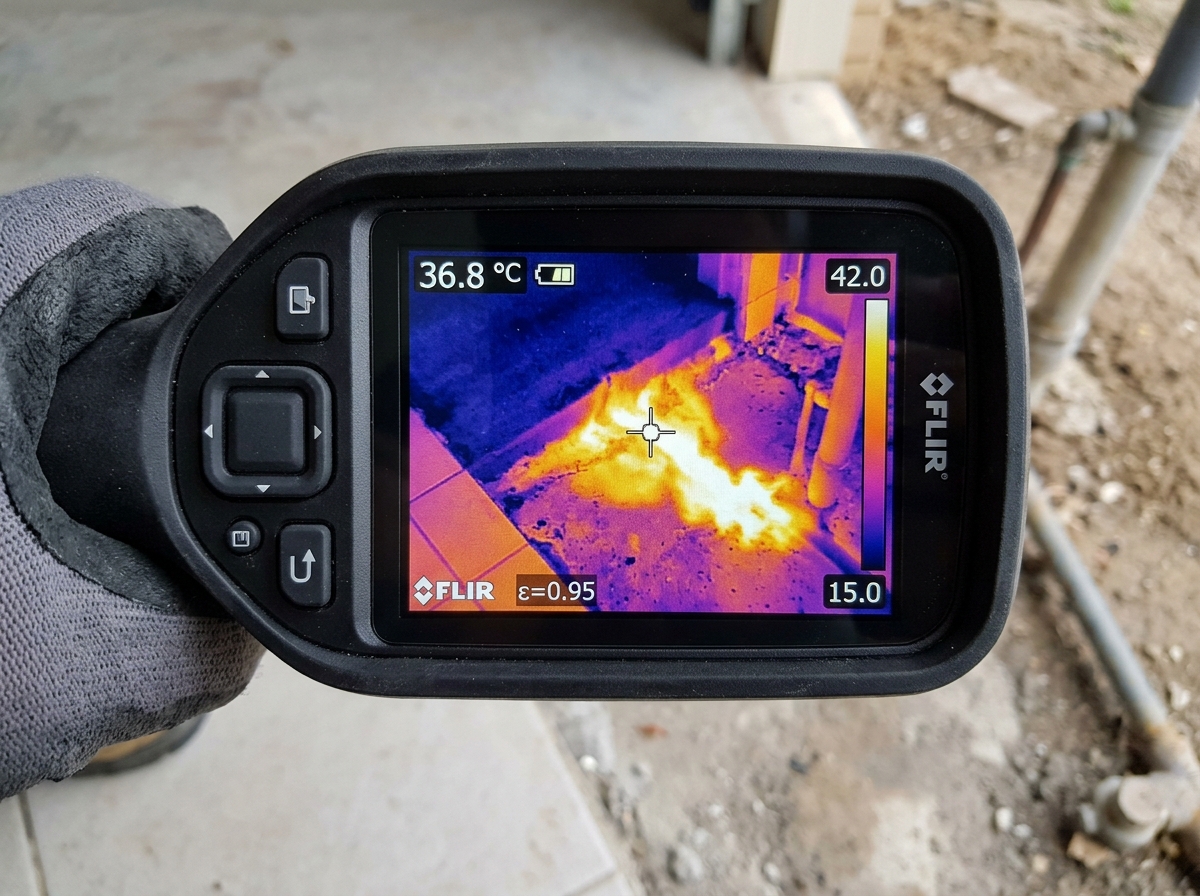
Because hot water radiates heat upward through concrete, thermal imaging is the premier diagnostic instrument for hot-water foundation leaks. Technicians utilize calibrated infrared cameras capable of measuring micro-differences in floor surface temperatures. Escaping heated water creates a clear thermal plume that shows up as bright red and yellow heat signatures against the cool blue background of normal concrete.
Once the thermal bloom is identified, technicians confirm the precise breach point using high-frequency acoustic listening discs and electronic pipe locators, as detailed on our slab leak detection page. This dual-verification method guarantees that repair crews know the exact location before opening concrete or planning an overhead bypass.
Repair vs. Reroute on the Hot Water Side
When addressing a hot water line leak under slab Temple properties have two viable engineering solutions:
Option A: Direct Spot Repair
A targeted hole is broken through the concrete directly above the failure point. The sand or crushed stone bedding is excavated to uncover the ruptured copper line. The corroded section is cut away and replaced with thick-walled Type L copper using silver-brazed fittings or mechanical flare unions. While direct spot repairs restore flow, they leave the remaining hot water copper line under the slab, which remains vulnerable to future thermal friction failure.
Option B: Overhead Hot Line Reroute (Recommended)
Because the thermal cycling that caused the first pinhole is occurring along the entire hot run, fixing one spot often results in another leak nearby within 12 to 24 months. The superior long-term solution is an overhead hot line reroute. Technicians isolate and cap the failing sub-slab hot line at both ends. A brand-new, flexible PEX line is routed overhead through walls or ceiling spaces directly from the water heater to the bathroom or kitchen manifold. This approach protects your flooring from excavation and permanently moves hot water out of the concrete foundation.
Preventing Secondary Water Heater Burnout
A running slab leak forces water heaters to run continuous cycles at full firing rate. This continuous heating accelerates mineral scale accumulation, stresses thermostats, and causes premature tank failure. If your water heater has been running nonstop for weeks prior to leak discovery, our technicians evaluate tank integrity during the repair process to prevent subsequent basement or garage flooding.
Explore Related Plumbing Solutions
Learn more about foundation plumbing and long-term remediation:
- Slab Leak Repair in Temple: Complete foundation leak options for Bell County homes.
- Slab Leak Reroute: Bypassing failing hot lines through walls and attic cavities.
- Whole-House Repiping: Full replacement of aging supply systems when multiple leaks occur.